
After a powerful 7.7-magnitude earthquake struck Myanmar and Thailand, the devastation has drawn a swift international response. The quake has caused significant destruction, claiming over 1,700 lives and injuring thousands more. Buildings collapsed, and critical infrastructure suffered severe damage, especially near Mandalay, Myanmar. Tremors were felt as far as Bangkok, leading to additional building collapses. The epicenter was located near Mandalay, Myanmar.
A devastating 7.7-magnitude earthquake has struck Myanmar and Thailand, resulting in over 1,700 fatalities and widespread destruction.
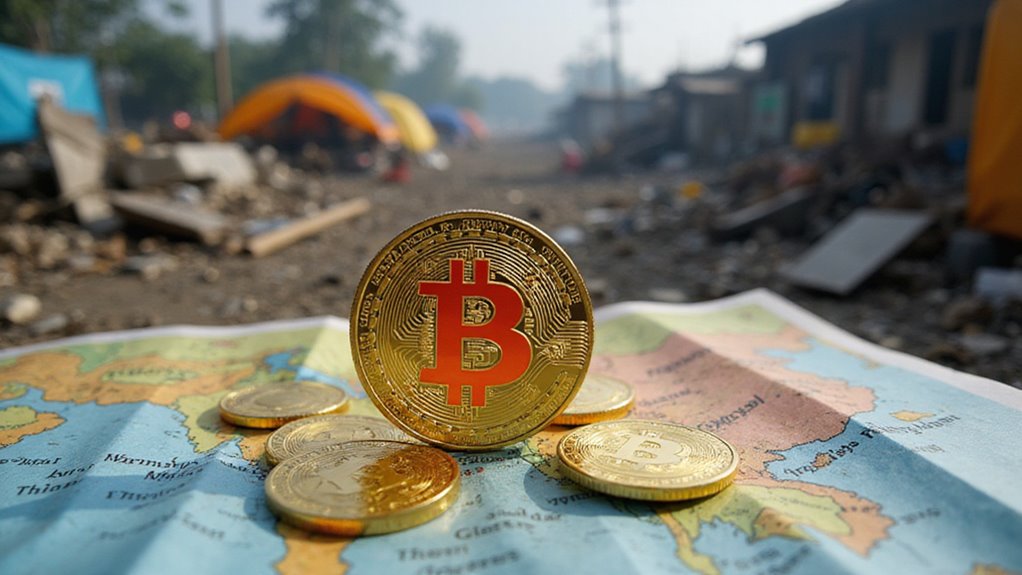
The earthquake has left over 28,000 children in refugee camps along the Thai-Myanmar border needing urgent assistance. In the wake of this disaster, Myanmar’s military government quickly appealed for international aid. In response, Binance founder CZ pledged $630,000 in BNB tokens to support relief efforts in both countries. This donation will be distributed through Binance Thailand and local partners, providing much-needed funds to help those affected.
Crypto donations have proven effective in past disasters, such as the Turkey-Syria earthquake and the Maui wildfires. Cryptocurrency offers a fast and transparent way to send aid. It allows for quick fund transfers that can reach remote areas, bypassing traditional banking delays. The low transaction costs make crypto donations more cost-effective compared to conventional methods. Additionally, these donations can be facilitated through stablecoins, which help maintain a steady value during times of crisis.
This growing trend in using cryptocurrencies for humanitarian aid is driven by their efficiency and effectiveness during crises. Additionally, the Singapore Red Cross has launched a public fundraising appeal to support relief and recovery operations in Myanmar and Thailand.
International organizations, like Save the Children, have also made appeals for support. A state of emergency has been declared in both Myanmar and Thailand. India’s Prime Minister has offered assistance, while the Singapore Red Cross launched a public fundraising appeal to help those affected. They are also providing mental health support to communities in need.
As the scale of the damage becomes clearer, the need for ongoing support is evident. The long-term recovery will require significant resources and commitment from the global community. The swift response from individuals and organizations shows the power of collective action in the face of tragedy.