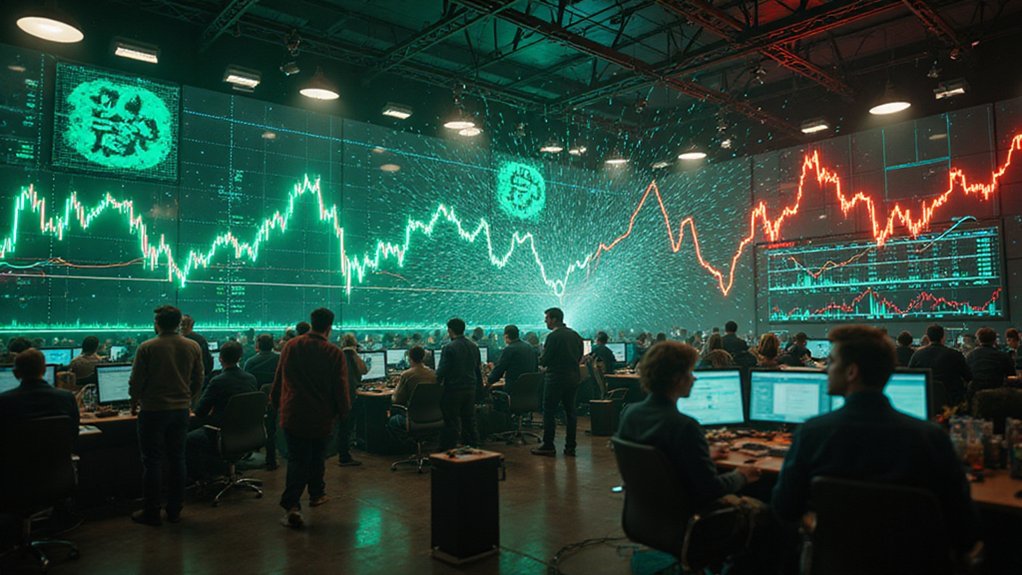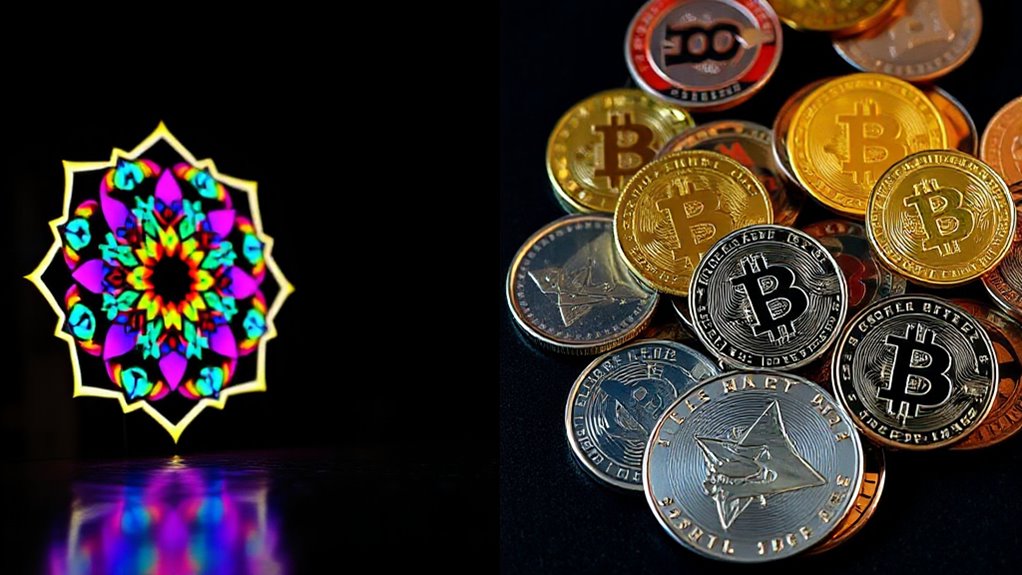

NFTs and cryptocurrencies are both digital assets but serve different purposes. Cryptocurrencies, like Bitcoin, are interchangeable and mainly used for buying and investing. They can be divided into smaller units. NFTs, on the other hand, are unique tokens that represent ownership of specific items, such as art or collectibles. They can’t be divided without losing their value. Both markets fluctuate, and blockchain technology underpins their security. There’s more to explore regarding their distinct features and impacts.

In the world of digital assets, NFTs and cryptocurrencies stand out as two distinct categories. Both utilize blockchain technology, which guarantees secure transactions through a public ledger. However, the way they function is quite different. Cryptocurrencies, like Bitcoin and Ethereum, are fungible and interchangeable. This means one unit of a cryptocurrency is equal to another. In contrast, NFTs, or non-fungible tokens, are unique. Each NFT represents ownership of a specific digital or physical item, such as art or collectibles.
NFTs and cryptocurrencies are distinct digital assets, each leveraging blockchain for unique functions and ownership verification.
The purposes of these digital assets vary considerably. Cryptocurrencies are mainly used for payments, savings, or investments, acting as digital money. On the other hand, NFTs are often found in art, music, and virtual real estate, proving ownership of unique items. This distinction in purpose leads to different use cases and market impacts for each asset. Additionally, NFTs can represent both physical and digital items, expanding their appeal in various markets. The versatility of NFTs allows them to tokenize unique assets beyond just digital art.
Fungibility brings advantages for cryptocurrencies, allowing them to be easily traded and divided into smaller fractions. This makes transactions more precise. NFTs, however, are non-divisible. If you divide an NFT, you lose its authenticity and ownership verification. The value of an NFT often relies on its rarity and authenticity, while cryptocurrencies are valued for their exchangeability. NFTs are managed through a digital ledger, which enhances their traceability and ownership verification.
Market sizes also reflect the differences between these two assets. The global cryptocurrency market reached over $3.21 trillion in 2024, while NFT sales exceeded $67 billion, showcasing their notable presence. Both markets are influenced by supply, demand, and scarcity, which can lead to volatility. Despite their differences, both NFTs and cryptocurrencies benefit from blockchain’s secure and transparent nature. Transactions are validated by miners or validators without a central authority, providing a degree of anonymity.
As digital assets continue to evolve, understanding their distinct characteristics remains vital for anyone interested in this exciting space.
Frequently Asked Questions
Can I Convert NFTS to Cryptocurrency Easily?
Converting NFTs to cryptocurrency isn’t always easy. It depends on market demand and the perceived value of the NFT.
Users can sell their NFTs on marketplaces like OpenSea or Rarible. After the sale, they can convert the cryptocurrency received to fiat money on exchanges like Binance or Coinbase.
However, there might be fees and platform restrictions. Additionally, some exchanges require identity verification before allowing withdrawals, which can complicate the process.
Are NFTS Environmentally Friendly Compared to Cryptocurrencies?
When comparing the environmental impact of NFTs and cryptocurrencies, both have significant carbon footprints.
NFTs generally use less energy per transaction than major cryptocurrencies like Bitcoin, which requires heavy mining. However, NFT transactions can still be energy-intensive due to their complexity.
Efforts are underway in both sectors to adopt renewable energy and improve sustainability.
Ultimately, both NFTs and cryptocurrencies face challenges in reducing their environmental effects and shifting to greener practices.
How Do I Store NFTS Securely?
To store NFTs securely, people can use different methods.
Hardware wallets keep NFTs offline on a physical device, offering strong protection from hackers.
Paper wallets involve printing private keys, while complete isolation guarantees NFTs aren’t connected to the internet.
Software wallets are convenient but can be vulnerable to online threats.
Additionally, decentralized storage like IPFS helps protect NFT files.
Following best practices, like securing seed phrases and using trusted wallets, is vital for safety.
What Platforms Sell the Most Popular NFTS?
Several platforms sell the most popular NFTs. OpenSea is the largest marketplace, known for its vast selection and high sales.
Rarible is favored for quick NFT creation and supports multiple blockchains.
Magic Eden specializes in Solana NFTs, attracting gamers with low fees.
LooksRare also focuses on Ethereum and rewards users.
Notable NFTs include Bored Ape Yacht Club, Crypto Punks, and Pudgy Penguins, which have gained popularity among collectors and investors alike.
Can I Create My Own NFT Without Coding?
Many people can create their own NFTs without coding. Several platforms, like Nifty Generator and OpenSea, offer user-friendly tools for artists.
These no-code platforms let users design and mint unique digital art easily. Some even support lazy minting, so creators don’t have to pay upfront fees.
With various customization options and community support available, aspiring NFT creators can join the market without needing technical skills.