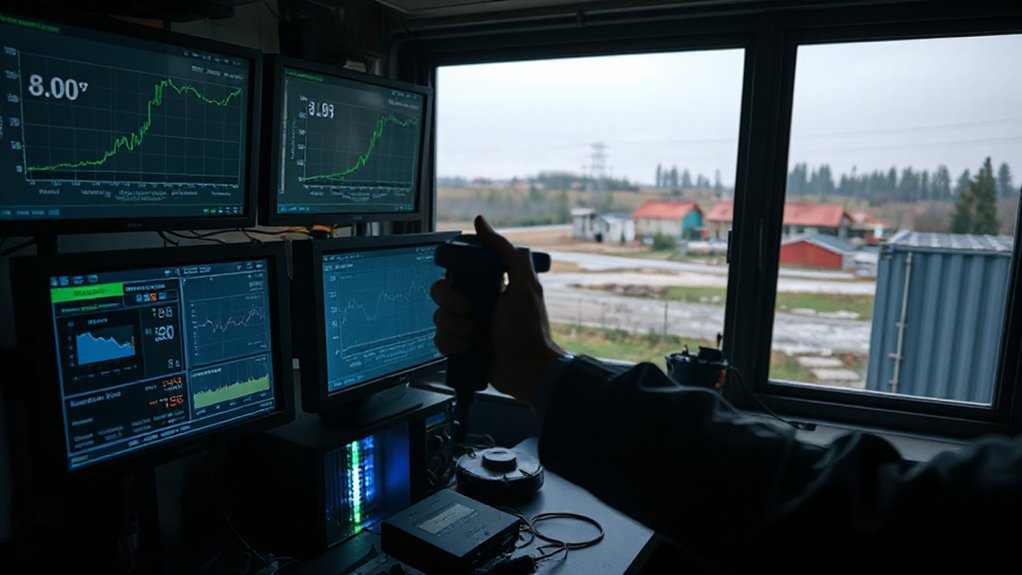

Russian engineers are developing new ways to find illegal crypto miners who drain power from the country’s electricity grid.
These miners use large amounts of electricity to run their rigs and earn digital money.
The engineers are using smart methods to catch them and stop the theft of energy.
In Dagestan, a region in the North Caucasus, the power company Rosseti reported that they found dozens of hidden crypto mining farms.
They used special techniques to locate these farms even when miners tried to hide them.
One key method involves working with internet providers.
Collaborating with internet providers helps engineers detect hidden illegal crypto mining operations.
When illegal miners shut down their internet temporarily, engineers measure changes in power use.
These sudden drops in electricity, combined with internet outages, help locate the hidden farms.
For example, in two villages, engineers detected a drop of 3.2 megawatts of power.
This means about 900 mining rigs were running there.
These rigs are often hidden in outbuildings, farms, or mobile units like vans and trucks, making them hard to find.
Despite hiding, the power load changes give their location away.
The detection process is important because illegal miners often operate in remote areas where power shortages are common.
They sometimes use supercomputers or set up farms in places that are hard to monitor, like science facilities or high-security sites.
This makes it more difficult for authorities to catch them.
The cooperation between power companies and internet providers has proven useful.
Power companies can temporarily cut internet access in suspected areas and see if the electricity use drops.
This confirms the presence of illegal mining.
Illegal crypto mining causes big problems for local communities.
It leads to frequent power outages and disrupts daily life.
The large energy use by miners is enough to power hundreds or even thousands of homes.
This puts a strain on the power grid and costs the country money.
Miners who get caught face legal action and fines.
For example, one engineer was fined 450,000 rubles for illegal Bitcoin mining at a secret nuclear lab.
Additionally, recent advancements in remote sensing technologies have improved detection capabilities, allowing authorities to identify hidden mining operations more quickly and accurately.
Illegal miners often bypass regulations, as many countries consider Bitcoin mining to be an asset, which complicates enforcement.