ERC20 tokens are digital assets built on the Ethereum blockchain. They use a standard that allows for easy interaction with various applications. These tokens have lower creation barriers, encouraging innovation among developers. ERC20 tokens play a key role in DeFi activities like lending and yield farming. They rely on smart contracts for secure transactions, ensuring transparency. Their potential is vast, with new uses expected as technology evolves. More insights about their features and future developments await.
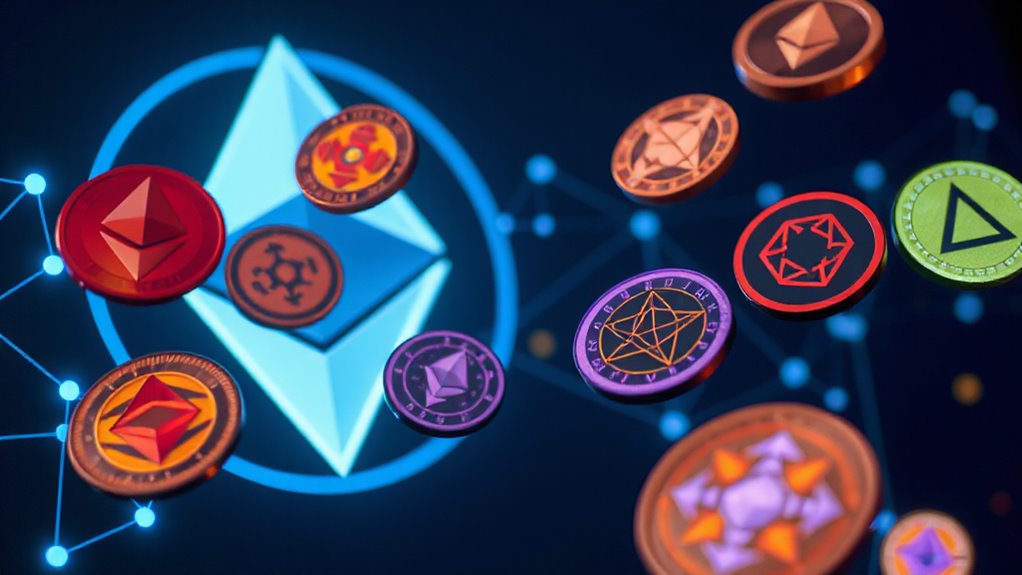
As the world of digital currency grows, ERC20 tokens have become an important part of the Ethereum blockchain. These tokens are a type of digital asset created using a standard known as ERC20. This standard provides a clear set of rules that help different tokens work well together on the Ethereum network. By ensuring compatibility, ERC20 tokens allow seamless interaction between various Ethereum-based applications.
One of the main advantages of ERC20 tokens is their standardized framework. This makes it easier for developers to create and manage tokens. They can focus on building new applications without worrying about the underlying technology. This low barrier to entry has led to a surge in innovation, especially in the field of decentralized finance, or DeFi. ERC20 tokens are frequently used in lending, yield farming, and other DeFi applications, enhancing their utility and boosting liquidity. Furthermore, the standard allows developers to mint tokens, simplifying the process compared to creating new blockchains. Additionally, ERC20 tokens utilize smart contracts to automate and secure transactions without the need for intermediaries.
The standardized framework of ERC20 tokens fosters innovation, enabling developers to create applications without technical constraints.
ERC20 tokens rely on smart contracts to automate token transfers. These smart contracts include mandatory functions, such as ‘totalSupply’ and ‘transfer’, which are essential for token operations. Optional functions can also be added to improve usability. Security features are built in to avoid unauthorized transactions, while event logging helps track all token movements. Additionally, the standard outlines functions that enforce transaction legitimacy and prevent unauthorized transactions.
Since their introduction, ERC20 tokens have revolutionized the way digital assets are created and used. They distinguish themselves from Ether, the native currency of the Ethereum network, by enabling a wide range of tokens that serve various purposes.
Despite the challenges of market volatility and security risks, ERC20 tokens remain critical to the Ethereum ecosystem.
Looking ahead, ERC20 tokens are expected to continue playing a significant role in the digital currency landscape. Their ability to represent external assets and provide governance rights in decentralized autonomous organizations (DAOs) makes them a versatile tool for users and developers alike.
As technology evolves, ERC20 tokens will likely adapt and find new applications in the expanding world of blockchain.
Frequently Asked Questions
How Do I Buy ERC20 Tokens Safely?
To buy ERC20 tokens safely, users should consider several steps.
First, they can choose between centralized exchanges for security or decentralized exchanges for privacy. It’s important to verify accounts and enable two-factor authentication for extra safety.
Users should review smart contracts to guarantee they meet ERC20 standards. Additionally, keeping an eye on market trends and transaction fees can help make informed buying decisions.
Finally, secure wallets are recommended for storing purchased tokens.
What Wallets Support ERC20 Tokens?
Many wallets support ERC20 tokens, each offering unique features.
Software wallets like MetaMask, MyEtherWallet, and Trust Wallet allow easy management and interaction with decentralized apps.
Hardware options include Ledger Nano X and Trezor Model T, known for their security.
Mobile wallets like Coinbase Wallet and Exodus provide user-friendly experiences.
Even platforms like Binance and Guarda Wallet let users manage these tokens.
Each wallet has its strengths, catering to different user needs.
Can ERC20 Tokens Be Converted to Bitcoin?
ERC20 tokens can be converted to Bitcoin, but it’s not a direct process. Users often go through cryptocurrency exchanges that support both tokens.
For example, platforms like FixedFloat or Changelly allow conversions. Some exchanges let users swap Tether (USDT) directly for Bitcoin.
However, conversion rates can change quickly and depend on market conditions. Fees also vary across different exchanges, making it important for users to check before making a transaction.
Are ERC20 Tokens Regulated by Governments?
ERC20 tokens aren’t uniformly regulated by governments. Different countries have their own laws regarding these cryptocurrencies.
Some nations may require compliance with financial rules, while others may not. Generally, ERC20 tokens do not meet all requirements for securities or anti-money laundering regulations.
As the situation evolves, new standards may emerge to address these gaps. Governments are continually updating laws to keep up with changes in the cryptocurrency market.
What Affects the Price of ERC20 Tokens?
The price of ERC20 tokens is affected by several factors.
First, supply and demand play an essential role. If more people want a token, its price goes up.
Market adoption also influences value; the more a token is used, the more valuable it may become.
Additionally, competition from other tokens can decrease demand.
Finally, external factors like gas fees and regulatory changes can create price fluctuations, impacting overall market stability.