
An oracle in cryptocurrency is a service that connects blockchain networks to real-world data. This allows smart contracts to access and verify information from outside sources. Oracles help guarantee that smart contracts execute correctly by providing accurate data, like asset prices. They play an essential role in decentralized finance (DeFi) and other applications, enhancing the overall functionality of blockchain. To learn about the different types of oracles, keep exploring this topic.
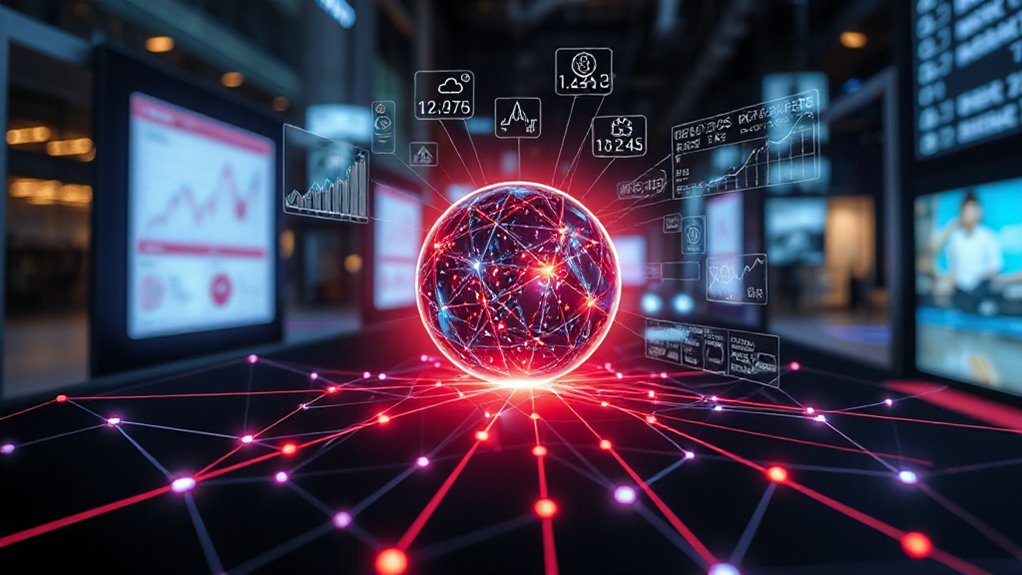
In the world of cryptocurrency, oracles play a vital role. They are special entities that connect blockchain networks with real-world data. By acting as a bridge, oracles help smart contracts access information outside the blockchain. This is important because smart contracts need verified data to execute correctly. Without oracles, these contracts would only operate within the limited information available on the blockchain.
Oracles expand the abilities of smart contracts considerably. They enable applications in decentralized finance (DeFi) and other industries to function more effectively. For instance, DeFi platforms rely on oracles for accurate asset price data. This allows users to make informed trading decisions. Additionally, oracles are crucial for facilitating peer-to-peer transactions in the DeFi space, which enhances the overall efficiency of the financial ecosystem. Oracles also help businesses make data-driven choices by linking blockchain systems to real events. In addition, oracles are critical for expanding the use cases of blockchain technology across various sectors. Moreover, decentralized oracles are essential for enhancing the security and reliability of the data provided.
Oracles significantly enhance smart contracts, powering DeFi applications with accurate data for informed decision-making.
There are different types of oracles. Software oracles gather data online through APIs. Hardware oracles use physical devices, like sensors, to collect information. Human oracles rely on people to input data based on real-life events. Inbound oracles bring external data to smart contracts, while outbound oracles send data from the blockchain to outside systems.
The process involves smart contracts requesting data from oracles. Once the oracles get the request, they verify and send the needed data back. Often, users must pay for this data access using tokens or fees. Oracles are designed to provide timely and accurate information, which is essential for executing smart contracts smoothly.
However, there are security challenges. Centralized oracles can be vulnerable to data manipulation. To address this, decentralized oracle networks have emerged. They reduce reliance on single points of failure and enhance security. By using multiple sources of data, these networks help guarantee that the information is reliable.
Frequently Asked Questions
How Do Oracles Ensure Data Accuracy in Crypto Transactions?
Oracles guarantee data accuracy in crypto transactions by gathering information from various sources. They often use decentralized networks to prevent manipulation.
Consensus mechanisms help to confirm that most nodes agree on data correctness. Using cryptographic signatures, oracles verify that data is authentic and hasn’t been altered.
They also employ redundancy measures, so multiple nodes check the same information, reducing the chance of errors or false data being used.
What Types of Oracles Are Commonly Used in Blockchain?
There are several types of oracles used in blockchain technology.
Software oracles gather data from online sources, while hardware oracles collect information from physical devices.
Inbound oracles bring data from outside the blockchain to smart contracts, and outbound oracles send blockchain data to external systems.
Cross-chain oracles allow data transfer between different blockchains.
Each type serves a unique purpose, making them essential for various applications in the blockchain ecosystem.
Can Oracles Be Hacked or Manipulated?
Oracles can indeed be hacked or manipulated. These attacks often target the external data sources that smart contracts rely on.
In 2022, over $403 million was lost due to such attacks, with one incident involving Mango Markets resulting in a $117 million loss.
Weaknesses, like relying on a single oracle or using centralized data, contribute to these vulnerabilities. This manipulation can disrupt entire blockchain systems and damage the reputation of affected projects.
How Do Oracles Interact With Smart Contracts?
Oracles interact with smart contracts by acting as a link between blockchain networks and outside information.
When a smart contract needs data, it sends a request to the oracle. The oracle then fetches the necessary information from various sources, like APIs or sensors.
After verifying the data, the oracle sends it back to the smart contract. This process allows smart contracts to function based on real-world events, making them more useful and dynamic.
What Are the Costs Associated With Using Oracles?
Using oracles involves various costs that can add up. These costs include transaction fees, data retrieval fees, and ongoing maintenance expenses.
Centralized oracles may seem cheaper but can create trust issues and risk of data manipulation. Decentralized oracles, while more secure, might charge higher fees due to their complexity.
Additionally, ensuring data accuracy and keeping oracles updated incur further operational costs. Overall, the expenses can considerably affect the overall use of oracles.