Solana (SOL) is a rapidly developing cryptocurrency and blockchain platform designed for fast and scalable decentralized applications. Founded in 2017, it uses a hybrid model that combines Proof-of-Stake (PoS) and Proof-of-History (PoH) for quick transactions. Solana can handle over 2,400 transactions per second, making it much faster than Ethereum. It’s popular for decentralized finance (DeFi) projects, gaming, and NFT marketplaces. There’s much more to discover about its features and innovations.
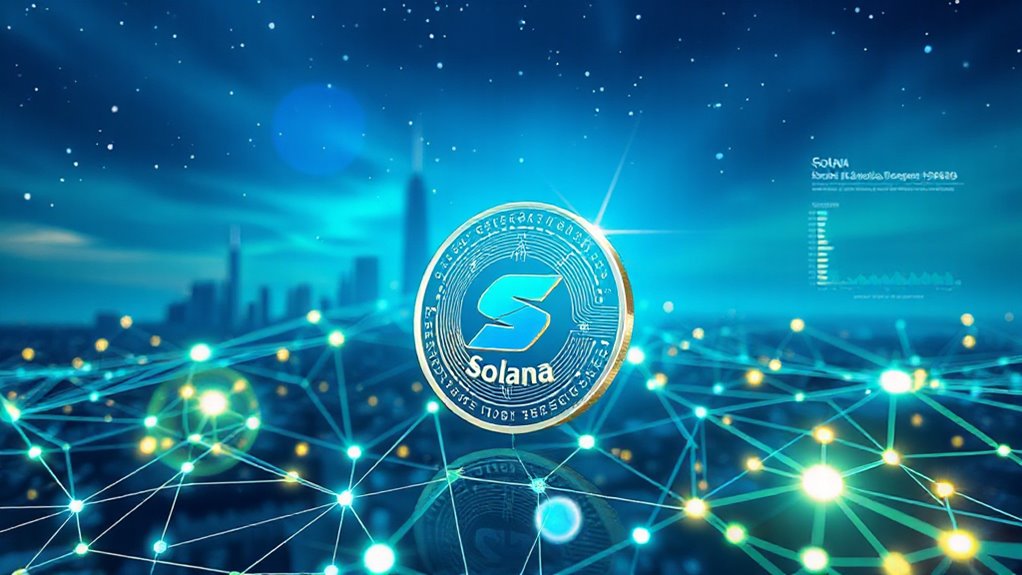
Solana, a blockchain platform founded in 2017, aims to host fast and scalable decentralized applications. Created by Solana Labs and managed by the Solana Foundation, it has become known for its impressive transaction speeds and low costs. This platform’s native cryptocurrency, SOL, plays a key role in transactions and staking within the network. In 2021, Solana saw a remarkable surge in value, reaching significant heights in market capitalization.
One of Solana’s standout features is its hybrid consensus model, which combines Proof-of-Stake (PoS) and Proof-of-History (PoH). The PoH mechanism helps achieve rapid transaction times by maintaining a historical record of transactions. Solana claims it can theoretically handle up to 28.4 million transactions per second (TPS) on a 40-gigabit network. Additionally, it supports smart contracts and has a token standard that is similar to Ethereum’s ERC-20, allowing for versatility in decentralized applications. Solana’s design allows for high transaction capacity, making it a competitive option in the cryptocurrency space. Furthermore, its architecture facilitates the creation of customized blockchains, enhancing its adaptability for various applications.
Solana’s unique hybrid consensus model combines PoS and PoH, enabling rapid transaction speeds and supporting versatile decentralized applications.
Compared to Ethereum, Solana offers faster transaction speeds and lower fees. While Ethereum processes around 15 TPS, Solana consistently handles over 2,400 TPS. Both platforms use PoS, but Solana’s unique PoH enhances its efficiency. Although Ethereum has a more established ecosystem, it experiences scalability challenges that Solana seeks to address through its advanced technology. With its ability to process over 65,000 transactions per second (TPS), Solana continues to push the boundaries of blockchain performance.
Solana is popular for various use cases, including decentralized finance (DeFi) applications, gaming, and NFT marketplaces. Its quick transaction capabilities attract developers looking to create scalable dApps. The platform’s low fees also make it appealing for microtransactions, which are small transactions that could be costly on other networks.
Since opening to the public in March 2020, Solana has faced some challenges, including network outages and legal issues. Despite this, it continues to innovate, working on projects like the Solana Saga mobile phone and seeking to expand its ecosystem in the future.
Frequently Asked Questions
How Does Solana’s Consensus Mechanism Work?
Solana’s consensus mechanism combines Proof of Stake (PoS) and Proof of History (PoH). Validators are chosen based on their stake size, and blocks are created every 400 milliseconds.
PoH helps verify the order of events, making the network faster and more efficient. Votes from validators determine block creation, with those holding more stake having greater power.
This system allows Solana to process up to 65,000 transactions per second, enhancing overall performance.
What Are the Main Use Cases for Solana?
Solana has several main use cases. It excels in scalability, processing up to 65,000 transactions per second with very low fees. This makes it ideal for decentralized exchanges and lending platforms.
Artists benefit from low-cost NFT marketplaces, while gamers enjoy fast, interactive play-to-earn games. Additionally, Solana supports the creation of stablecoins and offers affordable financial services, helping underserved communities access global markets and financial tools more easily.
How Can I Buy SOLana (SOL)?
To buy Solana (SOL), users can choose from several exchanges like Coinbase, Kraken, and Binance.
First, they need to create an account and verify their identity. After setting up a payment method, they can search for SOL and place a buy order.
Once the order is confirmed, the purchase is complete. Users can store SOL in software or hardware wallets for security, with options for both frequent and long-term storage.
What Wallets Support SOLana (SOL)?
Several wallets support Solana (SOL).
Software wallets like Solflare and Sollet are popular for their ease of use.
Hardware wallets, such as Ledger and Trezor, offer better security for long-term storage.
Mobile wallets provide convenience for users on-the-go, while web wallets allow access through browsers.
There are also paper wallets, which store keys offline.
Each wallet type has its own benefits, catering to different user needs and preferences.
Is Solana Environmentally Friendly Compared to Other Cryptocurrencies?
Solana is considered more environmentally friendly than many other cryptocurrencies. Its proof-of-stake system uses considerably less energy per transaction.
For example, a single transaction on Solana consumes only 0.00412 Wh, while Ethereum uses much more energy. Since December 2023, Solana has reduced its carbon footprint by 69%.
The network also offsets its emissions through carbon credits, making it a popular choice for eco-friendly projects and initiatives.