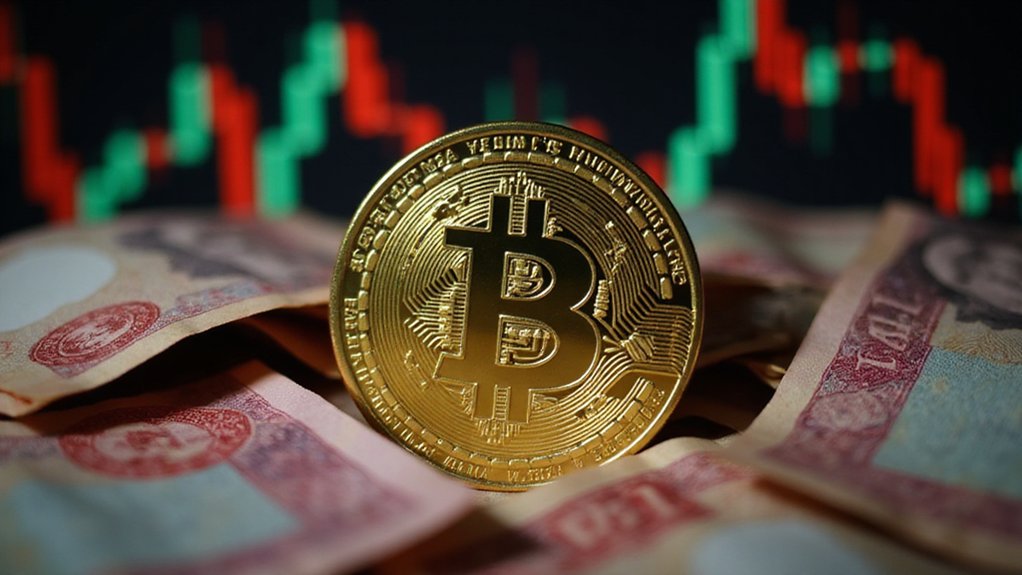

In recent years, many Chinese investors have shown a growing interest in Bitcoin, particularly during times of economic uncertainty. This interest has often been linked to the value of the Chinese yuan. For instance, when the yuan was slightly devalued in 2013, Bitcoin saw a rise in demand as investors looked for ways to protect their wealth. Similarly, a significant devaluation in 2015 caused Bitcoin’s demand to surge even higher.
Chinese investors often see Bitcoin as a hedge against the potential weakness of the yuan and against strict capital controls imposed by the government. These capital controls limit how money can move in and out of China, making Bitcoin an attractive option for those wanting to bypass these restrictions. Historical trends suggest that when the yuan experiences volatility, Bitcoin prices tend to increase. This pattern has been observed during past devaluations, where Bitcoin’s price saw significant jumps.
Currently, the economic climate is tense due to escalating trade tensions between the United States and China. The threat of increased tariffs could destabilize the yuan even further. As the yuan hits its lowest levels since 2023, many believe this situation may lead to a repeat of past patterns where Bitcoin demand rises sharply among Chinese investors.
Furthermore, Bitcoin’s decentralized nature makes it appealing as a safe-haven asset. It offers security against currency devaluation and economic instability. As global market uncertainties grow, Bitcoin’s appeal increases, especially for those in China looking to protect their investments. The Bitcoin mining process also highlights how the cryptocurrency operates independently of traditional financial systems, enhancing its allure.
With ongoing economic pressures, including potential capital flight from China, many analysts are watching closely. The combination of trade war tensions and the weakening yuan might just lead to another surge in Bitcoin demand from Chinese investors, similar to what was seen in 2013 and 2015. Only time will tell if history will repeat itself.