To buy Bitcoins, beginners can choose from several methods like credit cards, PayPal, or Bitcoin ATMs. Popular exchanges like Coinbase and Binance let users link bank accounts for easy transactions. They can also use market orders to buy Bitcoin at the current price or set limit orders for future purchases. It’s important to contemplate security options like hardware wallets for safe storage. There’s more to understand about the different ways to buy and store Bitcoin.
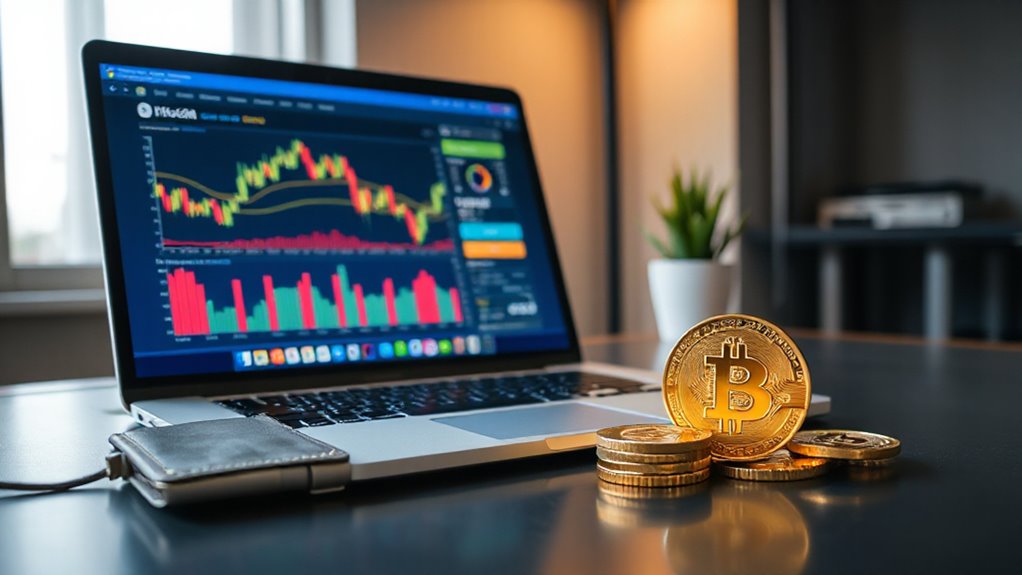
As more people show interest in digital currencies, buying Bitcoin has become a popular option. People can purchase Bitcoin using different methods like credit cards, PayPal, and Bitcoin ATMs. Various platforms make this possible, with Binance, Coinbase, and OKX being among the most well-known. Most exchanges allow users to connect their bank accounts or cards for easy transactions.
With growing interest in digital currencies, buying Bitcoin via credit cards, PayPal, and ATMs has never been easier.
When choosing a platform, it’s important to know the types of exchanges available. Centralized exchanges, like Coinbase and Binance, require users to complete Know Your Customer (KYC) procedures for regulatory reasons. These exchanges support fiat transactions, making it easier for newcomers. Additionally, Bitcoin serves as an attractive investment for portfolio diversification, which can be a motivating factor for many buyers. Furthermore, users should consider the legal and tax implications of Bitcoin purchases based on their location.
In contrast, decentralized exchanges allow for pseudo-anonymous transactions and do not require KYC. Each exchange has its own fees and features, so users should compare them to find what suits them best.
Understanding payment methods is also essential. Many exchanges let users link their bank accounts for deposits, while credit and debit cards are quick but may have higher fees. Some services, like MoonPay and Simplex, also help facilitate transactions. Additionally, Bitcoin ATMs allow users to buy Bitcoin with cash right away.
Once users choose a platform and payment method, they can place orders. There are different types of orders, such as market orders, which buy Bitcoin at the current price, and limit orders, which let users buy at a specific price. Some exchanges even offer options for recurring buys.
After purchasing Bitcoin, storage becomes vital. Users can opt for hardware wallets for high security, while software wallets are easier for regular transactions. Cold storage methods, like paper wallets, are great for long-term security.
Users should stay aware of security risks, including phishing scams and the importance of two-factor authentication to protect their accounts.
Frequently Asked Questions
Is Bitcoin Legal in My Country?
The legality of Bitcoin varies widely around the world. In 119 countries, Bitcoin is legal. Nations like South Korea and Japan allow its trading.
However, China has completely banned cryptocurrency transactions. Some countries, like Uruguay and Côte d’Ivoire, are developing regulations, while others, like Portugal, have friendly tax policies for Bitcoin.
Conversely, countries such as Afghanistan, Egypt, and Algeria have made Bitcoin illegal. It’s important to check local laws for specifics.
How Do I Store My Bitcoins Securely?
Storing bitcoins securely is essential for owners. Many use hardware wallets, which keep private keys offline, making them safer from hackers.
Software wallets are more convenient but riskier due to internet connections. Cold wallets store funds offline, while hot wallets are always online.
Multi-signature wallets require several approvals for transactions, adding extra security. Regular updates, strong passwords, and encrypted backups are also important for keeping bitcoins safe from theft and loss.
What Are Transaction Fees for Buying Bitcoins?
Transaction fees are payments made to miners for adding transactions to the blockchain. These fees can change based on the size of the transaction and how busy the network is.
Typically, they range from $0.50 to $2.50 but can increase during times of high demand. Larger transactions usually cost more.
To save on fees, users might batch transactions or use options like the Lightning Network, which offers lower costs.
Can I Buy Fractions of a Bitcoin?
Yes, people can buy fractions of a Bitcoin. Bitcoin is divisible into smaller parts, down to one hundred millionth of a Bitcoin, known as a Satoshi.
This feature makes it easier for individuals to invest small amounts. Most platforms that sell Bitcoin, like exchanges and peer-to-peer sites, allow users to buy these fractions.
This accessibility helps more people participate in the cryptocurrency market, regardless of their financial situation.
How Do I Convert Bitcoin Back to Cash?
Converting Bitcoin to cash can be done through various methods.
Bitcoin ATMs offer quick cash, but they often have high fees.
Centralized exchanges allow users to sell Bitcoin for cash, though this process can take days.
Peer-to-peer platforms enable users to set their own prices, but finding reliable buyers can be tricky.
Crypto debit cards provide flexibility, allowing cash withdrawals or purchases directly from Bitcoin holdings.
Each method has its own pros and cons.