Gas fees in crypto are payments users make to have their transactions processed on blockchain networks. They are essential for keeping the network secure and incentivizing validators. The fees consist of two parts: the gas limit, which is the maximum computational work a transaction can use, and the gas price, which is the cost per unit of work. Gas fees can vary, especially during busy times, affecting user costs. There’s much more to discover about how these fees work and their impact on transactions.

As blockchain technology grows, gas fees have become an important part of the cryptocurrency landscape. These fees are charges paid for transactions on blockchain networks. They fuel the computational work needed to process and secure these transactions. Gas fees are essential because they incentivize validators, who secure the network and process transactions. They also help prevent spam by attaching a cost to each transaction.
Gas fees consist of two key components: the gas limit and the gas price. The gas limit is the maximum amount of computational work a transaction can use. The gas price is the cost per unit of that work. Together, they determine the total gas fee for a transaction. These fees can change depending on how busy the network is. For instance, Ethereum, one of the most widely used blockchain platforms, requires a minimum of 21,000 gas units for a transaction. Gas mechanics on Ethereum ensure validation of transactions aim for fair market operation and minimize manipulation. Additionally, the dynamic nature of gas fees means that users must be aware of current market conditions to optimize their transaction costs.
Gas fees play a significant role in maintaining blockchain security. They discourage malicious activities and provide rewards for validators who verify transactions. Without these fees, networks could suffer from spam and might not function well. Ethereum relies heavily on gas fees to remain stable and secure.
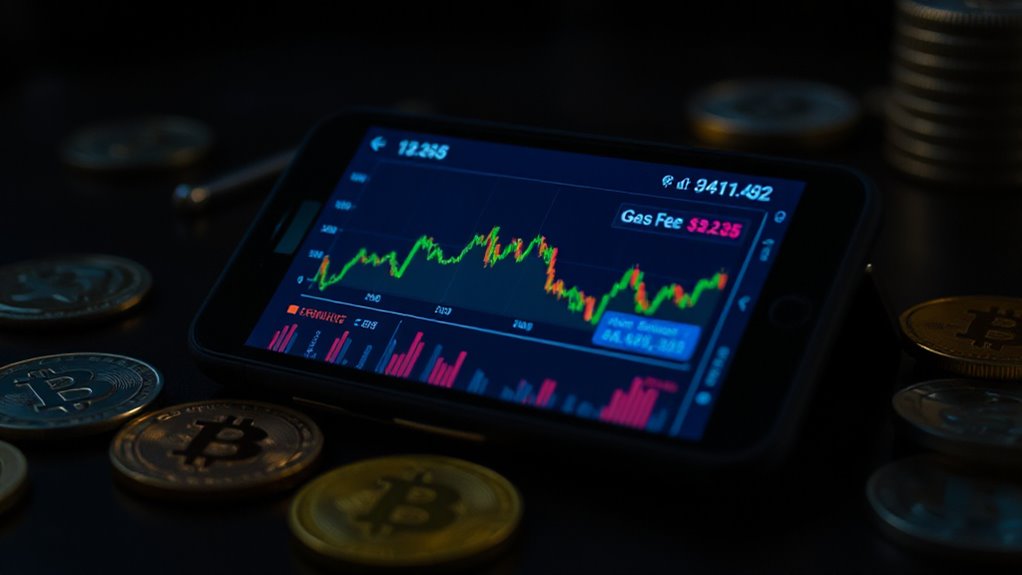
However, gas fees on Ethereum can be quite high during peak usage times. Events like the DeFi summer saw gas prices soar due to high demand. This congestion can hinder the mainstream adoption of cryptocurrencies. Users sometimes need to time their transactions strategically to manage costs.
Different blockchains have varying transaction fees. Unlike Bitcoin, which has lower fees due to simpler transactions, Ethereum’s complexity and capabilities justify its higher gas fees. Solutions like Layer 2 scaling can offer alternatives for cheaper transactions. Future upgrades, such as Ethereum 2.0, aim to improve network capacity and reduce gas fees, making transactions more accessible.
Frequently Asked Questions
How Are Gas Fees Calculated in Different Cryptocurrencies?
Gas fees in different cryptocurrencies are calculated using specific formulas. For Ethereum, the fee equals the gas limit multiplied by the gas price, which can change based on network demand.
Other cryptocurrencies, like Binance Smart Chain and Solana, typically have lower fees.
Bitcoin uses a different system, measuring fees in satoshis per byte.
Can Gas Fees Fluctuate During Transactions?
Gas fees can fluctuate during transactions. This happens mainly due to changes in network demand and congestion.
When more users are trying to make transactions at the same time, fees can rise sharply. Simple transactions generally require less gas than complex ones.
The fees adjust in real-time, meaning they can vary from one moment to the next. Users might see different prices depending on when they try to complete their transactions.
What Happens if I Set My Gas Fee Too Low?
If someone sets their gas fee too low, their transaction might not get processed quickly. It could stay pending for a long time or even fail completely.
This happens because the network may prioritize higher fees, leaving low-fee transactions at the bottom of the queue.
Additionally, if too many users choose low fees, it can cause more congestion on the network, making it harder for everyone to complete their transactions.
Do Gas Fees Apply to All Crypto Transactions?
Gas fees don’t apply to all cryptocurrency transactions. They mainly affect smart contract transactions on blockchains like Ethereum.
These fees help pay miners or validators for processing transactions and keeping the network secure. Other blockchains, such as Solana and Binance Smart Chain, also use gas fees.
However, traditional cryptocurrencies like Bitcoin use network fees instead. Network fees are for all types of transactions, not just smart contracts.
Are There Any Ways to Reduce Gas Fees?
There are several ways to reduce gas fees in cryptocurrency transactions.
One method is using Layer 2 solutions, which can cut fees considerably. Timing transactions during less busy times can also help lower costs.
Additionally, some blockchains offer cheaper fees than others. Using gas fee estimators can help users choose the best times to transact.
Finally, smart contract optimization and transaction batching can further lower overall expenses.