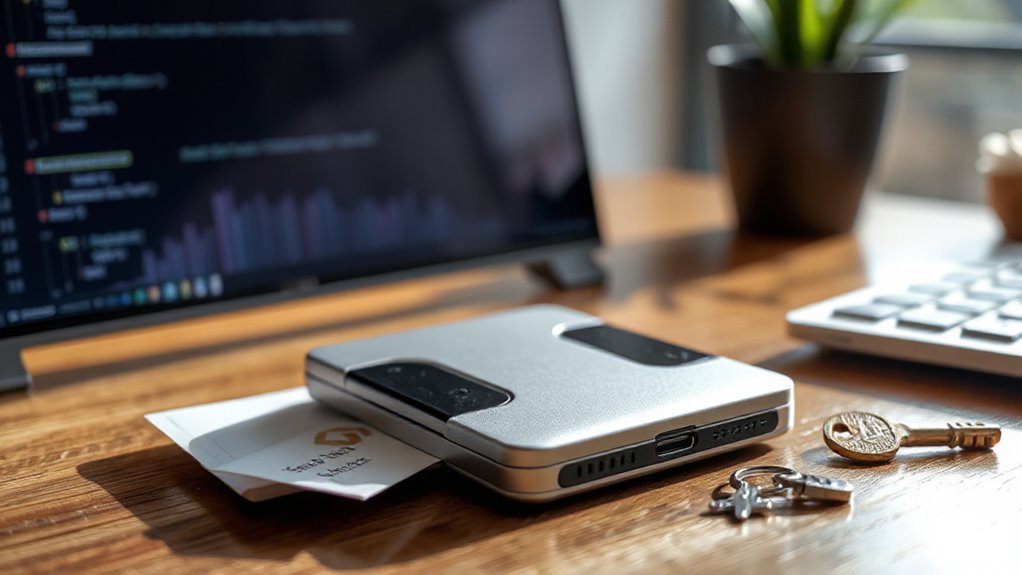

A non-custodial wallet is a type of digital wallet that lets users control their own cryptocurrency funds. Unlike custodial wallets, there’s no need to rely on third parties for managing keys or assets. Users hold their private keys, which boosts security and privacy. These wallets come in various forms, including software, hardware, and paper options. They’re gaining popularity due to their resistance to censorship. There’s more to discover about their features and benefits.

A non-custodial wallet is a type of digital wallet that lets users control their own funds. Unlike custodial wallets, these wallets do not rely on a third party for key management or asset control. Users hold their private keys, which means they have full responsibility for securing their own keys and assets. This level of control makes non-custodial wallets a popular choice for long-term asset storage, as they provide greater privacy and security. One of the key features of non-custodial wallets is their ability to minimize risks. Since funds aren’t transferred to a third party, users reduce their reliance on external entities. The censorship-resistant nature of non-custodial wallets further enhances user confidence in their management of assets. Hardware wallets, a type of non-custodial wallet, offer the most secure storage option by keeping private keys offline. Users can sign transactions offline and then upload them to the blockchain for confirmation. However, losing the private key or seed phrase can result in permanent asset loss, emphasizing the importance of security. Additionally, non-custodial wallets generally have lower hacking risks compared to custodial options, especially when users practice good security hygiene and follow Cryptocurrency Security Standards (CCSS).
Non-custodial wallets empower users with full control over their funds, offering enhanced privacy and security without third-party reliance.
There are various types of non-custodial wallets. Software wallets store keys on user devices or web interfaces, making them easily accessible. Hardware wallets are physical devices that enhance security by keeping keys offline. Paper wallets store keys on paper, while browser-based wallets provide convenient access through extensions. Mobile wallets are downloadable apps for smartphones, allowing users to manage their assets on the go.
Non-custodial wallets also provide a seed phrase for recovery if access is lost. This seed phrase acts as a backup to regain control of assets. Users must keep it secure and confidential, as losing it can lead to irreversible loss of funds. Following best practices for security can significantly help in protecting this sensitive information.
By giving users direct access to blockchain transactions, non-custodial wallets support decentralized finance (DeFi) services, enhancing user autonomy in financial management.
As interest in control and security grows, non-custodial wallets are gaining popularity. Many experienced users prefer them for their independence and resistance to censorship, making them a significant part of the digital finance landscape.
Frequently Asked Questions
Can I Recover My Funds if I Lose My Non-Custodial Wallet?
If someone loses their non-custodial wallet, recovering funds can be extremely difficult. Unlike custodial wallets, there’s no third party to help.
Users need a seed phrase to regain access to their assets. If they lose both the wallet and the seed phrase, the funds are considered permanently lost.
Consequently, it’s vital for users to store their recovery phrases safely and develop backup plans to avoid such losses.
Are Non-Custodial Wallets Safe From Hacking?
Non-custodial wallets can offer better security against hacking compared to custodial wallets. This is because users control their own private keys, reducing the risk of unauthorized access.
However, they require users to manage their own security. If someone loses their private keys or seed phrase, they can’t recover their assets.
What Cryptocurrencies Can I Store in a Non-Custodial Wallet?
Many types of cryptocurrencies can be stored in non-custodial wallets. Popular choices include Bitcoin (BTC) and Ethereum (ETH).
Users can also store various altcoins like Litecoin (LTC) and Monero (XMR). Stablecoins such as USDT, USDC, and DAI are commonly supported too.
Additionally, some non-custodial wallets allow users to manage and store non-fungible tokens (NFTs). This variety offers flexibility for users wanting to keep their digital assets secure.
Do I Need to Pay Fees for Using a Non-Custodial Wallet?
When using a non-custodial wallet, users generally don’t pay fees for owning or managing the wallet itself.
However, they must still cover network fees for transactions, which can vary. These fees depend on factors like network congestion and the complexity of the transaction.
Unlike custodial wallets, which might charge internal fees, non-custodial wallets allow users to control their transaction costs directly.
Proper management of these wallets is essential for security.
How Do I Choose the Best Non-Custodial Wallet for My Needs?
Choosing the best non-custodial wallet involves several important factors. First, a user should consider their technical skills, as some wallets require knowledge of managing private keys.
Next, user experience can vary, with some wallets being easier to use than others. Security measures are essential, too, so users need to adopt strong practices.
Finally, the type of wallet—software, hardware, or paper—can greatly affect security and convenience. Each option has its own strengths and weaknesses.