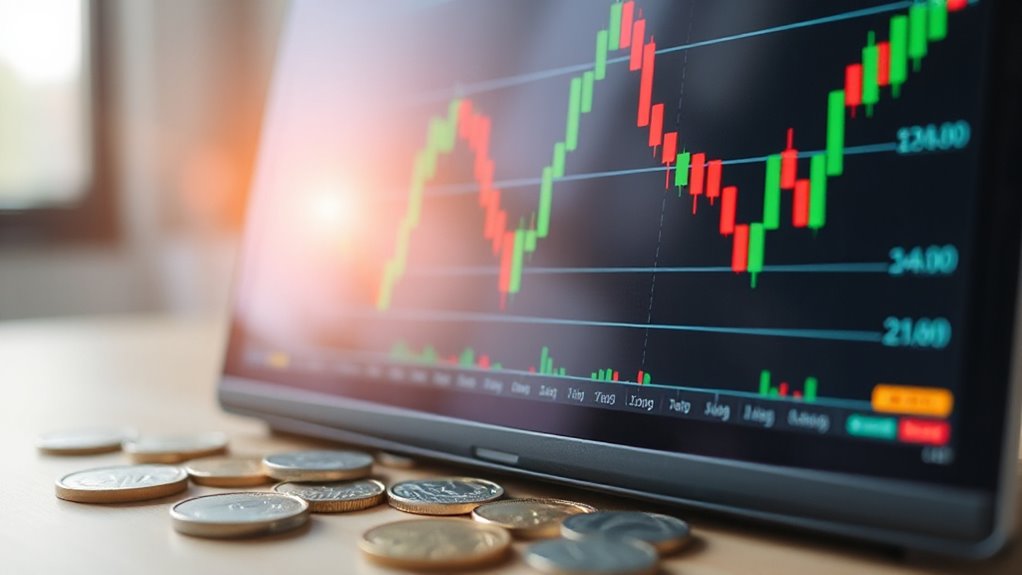

The term “bear market” describes a situation where asset prices drop considerably, typically by 20% or more. It gets its name from the way a bear swipes downward with its paws, symbolizing investor pessimism and fear. This type of market often lasts for months or even years and usually follows economic downturns. In bear markets, trading activity decreases as investors hold off on buying. There’s a lot more to explore about the effects and causes of bear markets.

Bear Market Explained
A bear market is a term that describes a significant decline in asset prices. Typically, this happens when prices drop by 20% or more over a period of time. During these markets, investors often feel pessimistic and fearful about the future. Bear markets can occur in various asset classes, including stocks, cryptocurrencies, and commodities. The term “bear market” comes from the way a bear swipes down with its paws, reflecting how stock prices move downwards.
Bear markets have several distinct characteristics. They involve prolonged price declines that can last for months or even years. Investor sentiment tends to be negative, which reduces buying activity. This hesitance to trade leads to decreased trading volume. Additionally, bear markets are often associated with negative economic indicators like weak employment rates and slow GDP growth. As confidence wanes, investors tend to become more risk-averse, which can further drive market prices down. Moreover, bear markets serve as a natural recalibration period for the market, allowing it to adjust to new economic realities. Historically, bears gain recognition for their accurate negative outlooks during these downturns, validating their views as market sentiment shifts. In the context of cryptocurrency bear markets, volatility is particularly pronounced, offering opportunities for long-term investors to buy assets at discounted prices.
Bear markets are marked by prolonged price declines, negative investor sentiment, and reduced trading activity, often linked to weak economic indicators.
There are several causes of bear markets. Economic recessions can lead to lower consumer confidence and spending. Sometimes, stock market bubbles occur when prices inflate too high and then correct sharply. Political uncertainty can also play a role, as it undermines market confidence. Large-scale selling, even without external factors, can trigger significant price drops. Furthermore, changes in inflation and monetary policy can affect corporate profits and investor sentiment.
Bear markets can have various effects on the economy and consumers. Consumer spending often declines as people feel less confident about their financial situations. Companies may face challenges, leading to layoffs and higher unemployment rates. Investment opportunities may become harder to spot. Additionally, market volatility can increase, creating rapid price fluctuations as panic selling occurs.
Frequently Asked Questions
How Long Do Bear Markets Typically Last?
Bear markets typically last for a range of time. On average, they last about 289 days, which is roughly 9.6 months.
Some bear markets can stretch to around 25 months, while others may last about a year and a half.
The duration can vary widely, with cyclical bear markets usually being shorter than secular ones, which can last for many years.
Each bear market experience is unique and unpredictable.
What Are the Signs of an Impending Bear Market?
Signs of an impending bear market can include rising unemployment and declining economic growth.
Investors might notice high inflation and increasing interest rates as warning signs.
Market indicators like the Moving Average Convergence Divergence (MACD) may also show bearish trends.
Additionally, if the Relative Strength Index (RSI) reaches extreme levels or if the yield curve inverts, it could signal trouble.
These factors combined often create an atmosphere of investor fear and caution.
Can Bear Markets Happen in Specific Sectors?
Bear markets can indeed happen in specific sectors.
While a bear market usually affects the overall stock market, certain industries may face downturns independently. For example, technology or energy sectors might struggle due to unique challenges.
Economic factors, like changes in consumer demand or new regulations, can cause these sector-specific declines.
Investors should watch these areas closely, as they can experience significant price drops even when the broader market is stable.
How Do Bear Markets Affect Individual Investors?
Bear markets can greatly affect individual investors. When stock prices drop considerably, many investors feel scared and uncertain. This fear often leads them to sell their stocks, causing prices to fall even more.
Investors may avoid riskier investments and seek safer options, like bonds. During these times, some might panic and withdraw their money from the market altogether.
Are Bear Markets Always Followed by Bull Markets?
Bear markets aren’t always followed by bull markets, though it often happens. Markets can fluctuate due to various factors, like economic changes or global events.
A bear market can lead to a bull market, but not every decline results in a recovery. Sometimes, markets stay low or enter a different phase altogether.
Investors need to understand that market patterns can vary widely, making predictions difficult. Each situation is unique and shaped by many influences.