Altcoins are digital currencies that serve as alternatives to Bitcoin. The name combines “alternative” and “coin.” There are many types of altcoins, including payment tokens, utility tokens, and meme coins. Each has unique features and uses, from enabling financial services to enhancing privacy. Altcoins can be volatile and are often influenced by Bitcoin’s price. Understanding more about their functions and market dynamics can provide useful insights for anyone interested in the cryptocurrency world.
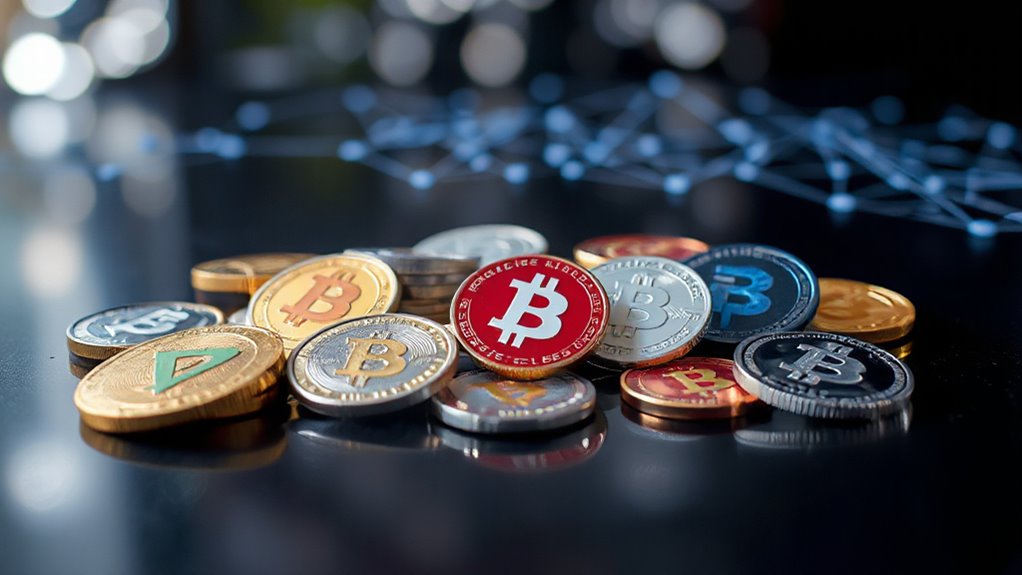
As the world of cryptocurrencies expands, many people are discovering altcoins, which are digital currencies other than Bitcoin. The term “altcoin” combines “alternative” and “coin,” reflecting their role as alternatives to Bitcoin. There are tens of thousands of altcoins in existence today. Each one offers different features and functions that set them apart from Bitcoin.
Altcoins exist mainly to address Bitcoin’s limitations and explore new uses. They cater to various needs, such as faster transaction speeds or smart contracts that execute automatically. Some altcoins are forks of Bitcoin or Ethereum, meaning they modify these popular currencies’ codebases. Others specialize in privacy, decentralized finance (DeFi), or maintaining stable values. Many altcoins are forks of Bitcoin or Ethereum, created to offer alternative features. Additionally, Bitcoin accounts for over 40% of the total cryptocurrency market, influencing many altcoins. The cryptocurrency market is known for its rapid changes, which can impact the performance of altcoins significantly.
Altcoins aim to overcome Bitcoin’s limitations, offering faster transactions, smart contracts, and specialized functions like privacy and DeFi.
The types of altcoins vary widely. Payment tokens are similar to Bitcoin, designed for currency exchanges. Utility tokens provide access to services within specific blockchain networks. Security tokens represent ownership of real-world assets. Stablecoins aim to keep their value steady, often pegging to assets like the U.S. dollar. Meme coins, like Dogecoin, gain popularity through online hype and social media.
Altcoins serve several use cases. They enable decentralized finance, allowing users to lend, borrow, and farm yields. Smart contracts help facilitate automatic, trustless transactions. Privacy-focused altcoins enhance user anonymity, while others support fast, low-cost international payments. Additionally, decentralized applications (DApps) can be built on various blockchain platforms, expanding technology’s reach.
Despite their numerous options, only a few altcoins dominate the market. Ethereum is popular for its smart contracts and DeFi capabilities. Litecoin focuses on fast transaction confirmations, while Ripple specializes in global money transfers. Cardano emphasizes security and scalability.
While altcoins offer potential, they’re known for their price volatility. Rapid price changes can make them risky investments. Market sentiment often drives their value, and not all projects succeed. Understanding these factors is essential for anyone interested in exploring the world of altcoins.
Frequently Asked Questions
How Do I Safely Store My Altcoins?
To safely store altcoins, users can choose from several methods.
Cold wallets, like hardware devices, keep private keys offline, minimizing online risks.
Hot wallets are internet-connected software options for quick access.
Paper wallets offer physical key storage, while custodial wallets are managed by exchanges.
Non-custodial wallets allow users to control their own keys.
Security measures, like two-factor authentication and secure internet connections, help protect against unauthorized access and theft.
Are All Altcoins Decentralized?
Not all altcoins are decentralized. While many operate on decentralized networks, some may be partially or fully controlled by a single entity.
The level of decentralization varies based on factors like consensus mechanisms and network design. For instance, some altcoins use Proof-of-Work, while others use Proof-of-Stake, which can influence their decentralization.
What Factors Influence Altcoin Prices?
Several factors influence altcoin prices.
Supply and demand play a big role; if more people want to buy than there are coins available, prices can rise.
Market sentiment, driven by fear or greed, also affects prices.
Additionally, regulations and media coverage can sway public perception.
Altcoins often compete with Bitcoin, which impacts their value.
Finally, unique use cases and trading volumes can further influence how much an altcoin is worth in the market.
Can I Mine Altcoins Like Bitcoin?
Many people wonder if they can mine altcoins like Bitcoin. The short answer is yes, but the process can be different.
Some altcoins use easier mining methods, needing regular computers instead of special hardware. Others have faster block times or unique algorithms that change how mining works.
However, the profitability can vary due to factors like block rewards and market prices. Each altcoin has its own rules and requirements for mining.
How Do I Choose Which Altcoin to Invest In?
Choosing an altcoin to invest in can be complex. Investors often look at several key factors.
They evaluate the technology behind the coin, including speed and security. The development team’s reputation is also important. A strong community can indicate potential success.
Additionally, market trends and real-world use cases are essential. Understanding how the coin fits into the broader market can help investors make informed decisions.
Each factor plays a role in the investment process.