A zero-knowledge proof is a method in cryptography. It allows one party, called the prover, to show another party, the verifier, that a statement is true. This happens without sharing any extra information. Developed in the 1980s, these proofs have important features like completeness and soundness. They’re often used in blockchain technology to keep transaction details secret. Zero-knowledge proofs play an essential role in ensuring privacy and security in digital communications. More interesting facts await!
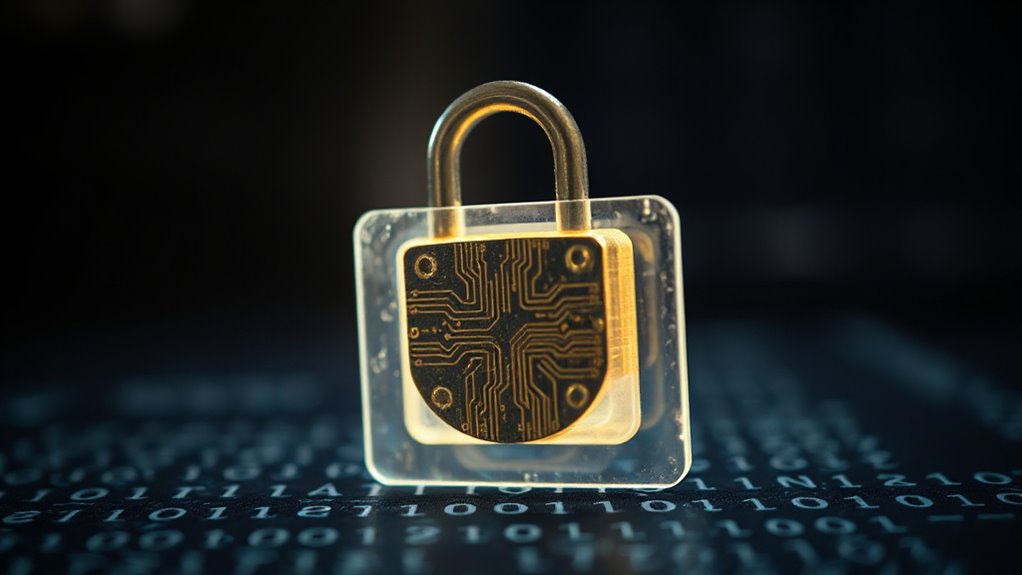
In the world of cryptography, zero-knowledge proofs stand out as a fascinating tool. These proofs allow one party, called the prover, to convince another party, the verifier, that a statement is true without sharing any extra information. This concept was first proposed in the 1980s by researchers like Shafi Goldwasser and Silvio Micali. The goal of zero-knowledge proofs is to verify statements while keeping the details private, which is particularly important in situations that require confidentiality.
Zero-knowledge proofs have three key properties that make them effective. First, completeness guarantees that if the statement is true, an honest prover will convince the verifier. Second, soundness means a dishonest prover can’t trick an honest verifier into believing a false statement, except by chance. Finally, the zero-knowledge property ensures that the verifier learns nothing beyond the truth of the statement. These proofs are often probabilistic, which means they may have a small chance of error, but this can be minimized by repeating the process. Additionally, the zero-knowledge property means that even if a verifier is convinced of the statement’s truth, they cannot use that information to prove the statement to third parties.
Zero-knowledge proofs ensure privacy with completeness, soundness, and the zero-knowledge property, allowing secure verification without extra information.
There are different types of zero-knowledge proofs. Interactive proofs involve a conversation between the prover and verifier, while non-interactive proofs allow the prover to create a single proof anyone can check. Examples include zk-SNARKs and zk-STARKs, which are popular in blockchain technology. Zero-knowledge proofs enhance privacy in blockchain applications, ensuring that transaction details remain confidential while still verifying their validity.
Zero-knowledge proofs have many real-world applications. In the blockchain space, they help keep transaction details private. They also enable users to verify their identities without revealing personal information. In finance, these proofs help reduce fraud by verifying transactions securely. For voting, they guarantee that voter privacy is protected during elections.
Frequently Asked Questions
How Is Zero-Knowledge Proof Used in Blockchain Technology?
Zero-knowledge proofs are used in blockchain technology to enhance privacy and security. They allow users to confirm transactions without revealing sensitive details, like amounts or identities.
This method is important for applications like ZCash, where transactions remain anonymous. Zero-knowledge proofs also support secure voting systems and help developers create privacy-focused decentralized applications.
Can Zero-Knowledge Proofs Be Applied to Voting Systems?
Zero-knowledge proofs can definitely be applied to voting systems. They help keep voters’ choices private while guaranteeing that votes are counted correctly.
By using these proofs, elections can be secure and trustworthy. Voters can prove their votes are valid without revealing their identities. This technology also helps prevent fraud and guarantees that the voting process is fair.
What Are the Limitations of Zero-Knowledge Proofs?
Zero-knowledge proofs have several limitations.
Balancing their completeness and soundness can be tricky, often affecting efficiency. They also require significant computational resources, making them harder to use widely.
Trust in certain assumptions about problem difficulty is vital; if those assumptions fail, security may be at risk.
Additionally, real-world implementation faces challenges in scaling and user experience, complicating integration with current systems and ensuring both privacy and usability.
Who Invented Zero-Knowledge Proofs?
Zero-knowledge proofs were invented by three key figures: Shafi Goldwasser, Silvio Micali, and Charles Rackoff. They introduced the concept in a 1985 paper that changed cryptography.
Their work focused on proving knowledge without revealing the actual information. This innovative idea was met with some skepticism at first but gained acceptance as its benefits became clear.
Their contributions earned them the prestigious Gödel Prize in 1993 for their groundbreaking research in interactive proof systems.
Are There Different Types of Zero-Knowledge Proofs?
Yes, there are different types of zero-knowledge proofs. Some require back-and-forth communication between the prover and verifier, known as interactive proofs.
Others don’t need ongoing interaction, like non-interactive proofs. Popular examples include zk-SNARKs, which are efficient, and zk-STARKs, known for their speed and scalability.
Bulletproofs are another type that allows private transactions without needing a trusted setup. Each type offers unique features for privacy and security in various applications.