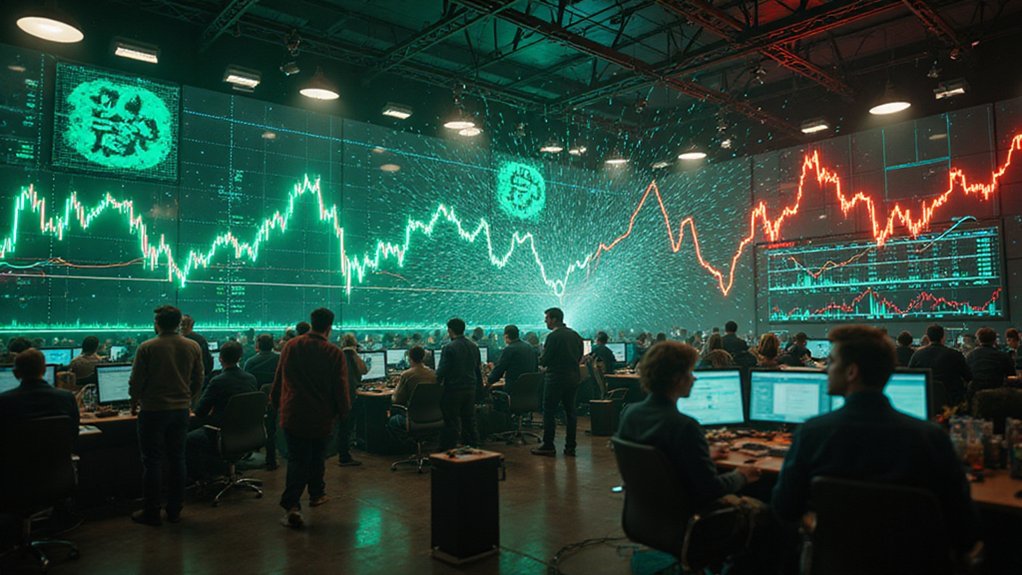

Bull markets and bear markets are important concepts in investing. A bull market occurs when stock prices rise by 20% or more, creating an optimistic investor sentiment. In contrast, a bear market happens when prices fall by 20% or more, leading to fear and pessimism among investors. Key factors influencing these markets include economic indicators like GDP growth, interest rates, and corporate earnings. Understanding these dynamics is essential for anyone looking to grasp market trends. More insights await.

Bull markets and bear markets are two key concepts in the world of finance that describe how stock prices move over time. A bull market happens when stock prices rise consistently. Typically, this means prices increase by over 20% from recent lows. Investors feel optimistic and confident during a bull market. This positive sentiment leads them to buy more stocks. Strong economic conditions often accompany bull markets. When the economy is growing, unemployment is low, and GDP is robust, investors tend to be more willing to put their money into the market. Bull markets often reflect positive investor sentiment in response to favorable economic indicators.
In contrast, a bear market is characterized by falling stock prices. This usually means a decline of over 20% from recent highs. During a bear market, investors often feel pessimistic and fearful. This leads to more selling and less investment. Economic downturns, rising unemployment, and reduced GDP growth typically occur alongside bear markets. In this environment, there is more supply than demand for stocks, causing prices to drop.
Certain economic indicators can help determine whether the market is in a bull or bear phase. For instance, GDP growth is associated with bull markets, while declines suggest a bear market. Similarly, low unemployment rates signal a bull market, while high rates hint at a bear market. Interest rates and inflation also play significant roles. Falling interest rates can boost bull markets, while rising rates may indicate a bearish trend. Low to moderate inflation supports bull markets, but high inflation can be bearish. Bear markets often coincide with negative economic indicators which can further exacerbate investor sentiment and lead to prolonged downturns. Investor sentiment can drive markets more than fundamentals during these phases, leading to significant shifts in market dynamics.
Market shifts can happen due to various causes. Economic events, like global conflicts or pandemics, can trigger changes in the market. Consumer confidence and corporate earnings also influence market trends. Government policies and global market conditions are other factors that can impact whether a market is bullish or bearish. Understanding these concepts can help investors navigate the complex world of finance.
Frequently Asked Questions
How Do Economic Indicators Influence Bull and Bear Markets?
Economic indicators play a key role in shaping bull and bear markets. Rising GDP and low unemployment often signal a bull market, boosting investor confidence and spending.
In contrast, falling GDP and high unemployment are linked to bear markets, creating fear among investors. Such negative sentiment can lead to increased selling.
Additionally, government policies, like low interest rates, can also influence market conditions, encouraging growth or contributing to economic downturns.
Can Individual Investors Profit in Bear Markets?
Individual investors can profit in bear markets through various strategies.
They might consider short selling, where they sell borrowed stocks to buy them back later at lower prices. Another option is using put options, allowing them to sell stocks at a set price.
Some investors diversify their assets to reduce risks. Additionally, finding undervalued stocks can lead to gains when the market eventually recovers.
However, these strategies come with risks and challenges, requiring careful consideration.
What Historical Events Triggered Major Bull or Bear Markets?
Major bull and bear markets have been triggered by significant events in history.
The 1929 stock market crash led to the Great Depression, marking a severe bear market.
In contrast, the post-World War II era saw a strong bull market fueled by economic growth.
The 2008 financial crisis resulted in another bear market, while the 2011-2019 period enjoyed a bull market, supported by low interest rates and a recovering economy.
How Long Do Bull and Bear Markets Typically Last?
Bull markets usually last longer than bear markets. On average, bull markets can last about 3.8 to 4.2 years. Some have even lasted over a decade.
In contrast, bear markets tend to be shorter, typically lasting around 11 to 15 months. However, the duration can vary depending on economic conditions. Major events and investor feelings also play a role in how long these markets last.
Understanding these patterns can help make sense of market changes.
Are Bull and Bear Markets Predictable With Certainty?
Bull and bear markets aren’t predictable with certainty. Many factors, like economic indicators and investor behavior, play a role in market trends.
While some models can estimate future market conditions, they often face challenges, making real-time predictions difficult. Historical data can identify past trends, but it doesn’t guarantee future outcomes.
Additionally, market corrections can happen without marking a bear market, adding to the complexity of forecasting. Overall, uncertainty remains a key feature of market behavior.