
A fungible token is a type of digital asset that’s interchangeable with another of the same kind. Each token holds the same value and can be easily exchanged. They are often created using smart contracts based on standards like ERC-20. Fungible tokens are widely used in cryptocurrency transactions, decentralized finance, and even gaming. Their unique characteristics, like high liquidity and divisibility, make them valuable in digital finance. More details on their applications and benefits can be found.
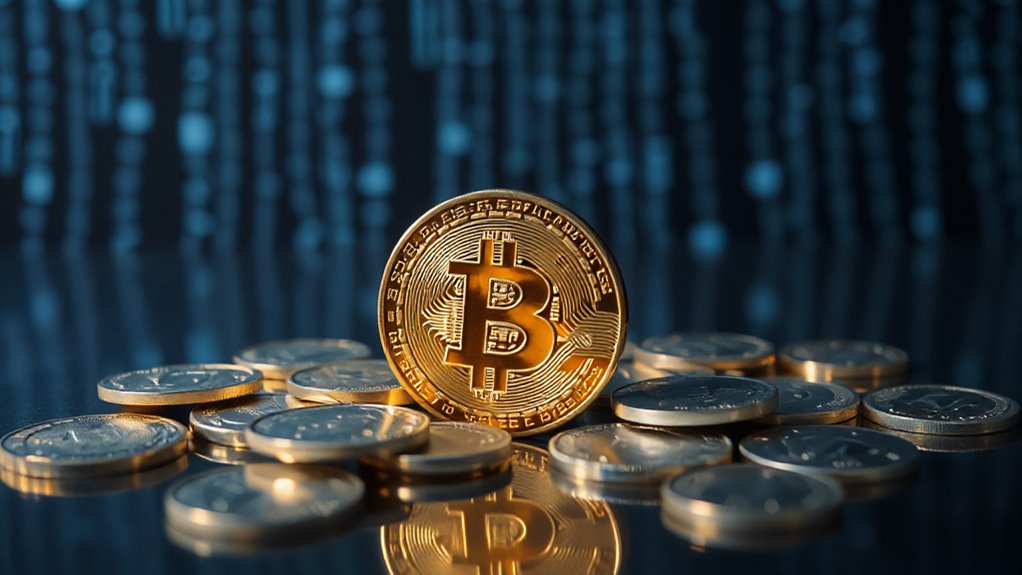
Fungible tokens are digital assets that can be easily exchanged for one another, making them a popular choice in the world of cryptocurrencies. Each fungible token is identical to another of the same kind. This quality is known as interchangeability. For example, if someone has a Bitcoin, it can be traded for another Bitcoin without losing any value.
One of the key characteristics of fungible tokens is their divisibility. This means they can be broken down into smaller parts. This feature allows for micro-payments and investments, making it easier for people to buy or sell small amounts. Additionally, fractionalisation enables infinite divisibility of fungible tokens, further enhancing their utility. Furthermore, fungible tokens are often used in trading and barter systems, which showcases their long-standing significance in financial transactions. Their design as ERC20 tokens has contributed to their popularity in the decentralized finance ecosystem.
The divisibility of fungible tokens enables micro-payments, facilitating easier buying and selling of smaller amounts.
Fungible tokens are also uniform. They don’t have unique features that set them apart from each other. Liquidity is another significant aspect of fungible tokens. They are typically easy to trade because many people want them. This high demand, combined with their divisibility, contributes to their liquidity.
Most fungible tokens follow standards like ERC-20, allowing them to function seamlessly on various blockchain platforms. They serve as digital currencies and stores of value.
Fungible tokens have several applications. They are widely used in cryptocurrency transactions, providing secure and efficient ways to send and receive money. They also play an important role in decentralized finance (DeFi) ecosystems.
In gaming, fungible tokens can serve as in-game currencies. Additionally, they are often used in loyalty programs, rewarding customers for their purchases.
Fungibility contrasts with non-fungible tokens (NFTs). While fungible tokens can be exchanged without losing value, NFTs are unique and cannot be exchanged on a one-to-one basis. NFTs focus on ownership and authenticity, while fungible tokens emphasize value exchange.
Fungible tokens are created and managed through smart contracts. This technology allows for efficient minting, transferring, and burning of tokens. Overall, fungible tokens are versatile assets that have become central in digital finance and other industries.
Frequently Asked Questions
How Are Fungible Tokens Created on a Blockchain?
Fungible tokens are created on a blockchain through a specific process. First, a user sets parameters like the token’s name, symbol, and supply.
Then, they initialize a transaction, sign it with a key, and submit it to the network. This results in a unique token ID.
Platforms like Ethereum, Hedera, and Algorand offer tools for this process. Once created, these tokens can be used in various financial activities, enhancing digital transactions.
What Are the Main Uses of Fungible Tokens?
Fungible tokens have several main uses. They act as a payment method, making it easy to buy and sell goods online.
These tokens also help with small transactions, known as micropayments. In decentralized finance, they provide liquidity for trading and allow users to earn returns through yield farming.
Additionally, fungible tokens can be used for governance, letting holders vote on important decisions in blockchain projects. Their versatility makes them valuable in today’s digital economy.
Are Fungible Tokens Always Cryptocurrencies?
Fungible tokens aren’t always cryptocurrencies. While many fungible tokens, like Bitcoin and Ethereum, serve as digital currency, others have different purposes.
For example, stablecoins maintain a stable value and are used for transactions. Additionally, some fungible tokens represent assets in decentralized finance or gaming.
Their key feature is interchangeability, meaning each unit is the same as another, but their applications can vary widely beyond just being a form of currency.
Can Fungible Tokens Be Traded on Any Platform?
Fungible tokens can’t be traded on just any platform. They require specific platforms that support them, like various cryptocurrency exchanges.
Popular choices include Binance and Uniswap, where users can buy, sell, and trade these tokens. These platforms provide important features like real-time market data.
Additionally, fungible tokens can be stored in compatible digital wallets, such as MetaMask, to facilitate easy access and management of trades.
How Do Fungible Tokens Differ From Non-Fungible Tokens?
Fungible tokens and non-fungible tokens serve different purposes.
Fungible tokens are identical and interchangeable, like coins or dollars. Each unit holds the same value and can be divided into smaller parts.
In contrast, non-fungible tokens are unique and can’t be exchanged for one another. They often represent specific items, like digital art or collectibles.
This key difference means fungible tokens are used for transactions, while non-fungible tokens focus on ownership of distinct assets.